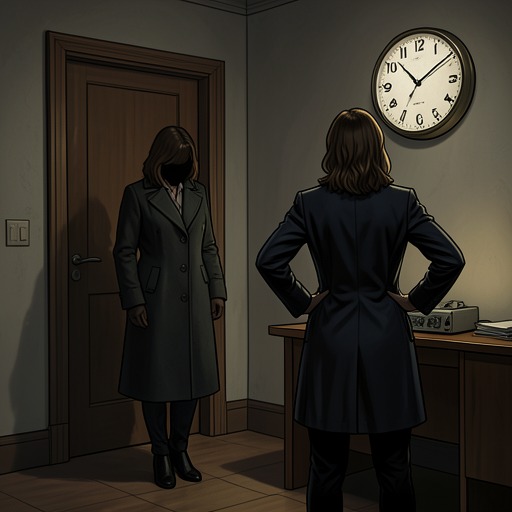
Kenneth von Kwist
Crow GirlKenneth von Kwist is a prosecutor whose polished self-image conceals a long record of accommodation with powerful men. He helps keep allegations against Per-Ola Silfverberg and Karl Lundström from receiving proper scrutiny, while his professional conflict with Detective Superintendent Jeanette Kihlberg exposes his sexism and careerism. As the investigation gathers force, he recognizes that favors for Viggo Dürer, Silfverberg, Lundström, and former police commissioner Gert Berglind have entangled him in a system of bribery and concealment. His belated consent to a national alert for Dürer marks a change in conduct, but not an escape from the consequences of his complicity.
Identity and Professional Persona
Von Kwist is vain and attentive to reputation and appearance. He is not from a noble family; he adopted the prefix von while still at school because it made him seem special. The invented distinction captures his investment in status: he wants the appearance of authority as much as its privileges, and he protects his professional standing even when doing so means neglecting the truth.
His dealings with Jeanette show that this self-regard has a gendered edge. He opposed her promotion to detective superintendent and, with the unofficial backing of Jeanette Kihlberg's prosecutor colleague, supported another candidate—a man. Jeanette receives the position despite his disapproval, but his resentment continues to shape their working relationship. When she urges a quick resolution to the investigation, he frames speed as beneficial to both of them, while his attitude makes clear that their professional partnership is not an equal one.
The same posture informs his exchanges about the investigation. After Jeanette directs attention toward Furugård, von Kwist tells her to forget him: Furugård has an alibi and is not involved. He calls following that lead a serious mistake, placing the blame on Jeanette even as his own confidence in his judgments proves unreliable. The episode establishes a pattern in which he invokes authority to shut down a line of inquiry, then treats his own position as the measure of what should be believed.
Handling Allegations and Witnesses
Von Kwist's role in the earlier follow-up interview with Per-Ola Silfverberg becomes a test of his memory and credibility. He recounts the session in detail: Copenhagen police had asked him to attend, former police commissioner Gert Berglind conducted the interview, and Per-Ola was accompanied by his lawyer, Viggo Dürer. Per-Ola denied the allegations and described his foster-daughter as having a vivid imagination. Von Kwist recalls him as deeply affronted and says the officials were confident he was telling the truth.
Jeanette questions why that confidence survived the seriousness of the accusations and Per-Ola and his wife's departure from Denmark after his release. Von Kwist answers from the certainty of his earlier judgment rather than engaging with the implication that the departure might be suspicious. His precise recollection is therefore not evidence of impartiality: it gives him the means to repeat the old account fluently, even as Jeanette asks why the investigation accepted Per-Ola's denial so readily.
His treatment of Karl Lundström's disclosures follows a related path. After a conversation with Annette Lundström, von Kwist worries that the allegations will implicate people he knows. He considers whether Karl's medication makes his statements unreliable and settles on the explanation that heavy medication caused Karl to imagine everything. The thought offers a convenient defense, but he remains troubled by the possibility that Per-Ola's foster-daughter was right about abuse and that Ulrika Wendin was drugged and raped. His doubts expose how easily he can use a witness's medication to discredit testimony—and how difficult it is for him to keep that explanation intact once he sees the number of people implicated.
When Jeanette speaks with Ulrika, she outlines the strength of the case against Karl and tells her that the report Ulrika made seven years earlier could be reopened, with a reasonable prospect of success. Ulrika does not want to start the process again. The episode places the prosecutor's procedural understanding against the limits of what it can repair: an available legal route does not undo the burden of asking a witness to revisit her experience. Later, von Kwist fears that Ulrika may be in danger after Jeanette reports her missing. He has a limit, he admits to himself, even if he can hardly be called conscientious; the realization comes after his previous choices have helped leave the situation precarious.
Bribes, Favors, and Complicity
Von Kwist's anxiety grows when he realizes that the case involves numerous people he knows personally or thought he knew. He asks himself whether he has been a useful idiot, helping child abusers and rapists go free. The question is not merely about bad judgment: the evidence connects his conduct to repeated favors for Dürer, Berglind, and Lundström, rewarded in money and other benefits.
He knows that Dürer arranged bribes for Annette Lundström and Ulrika Wendin, but also knows that the original idea was his. That knowledge makes it impossible for him to cast himself as a detached prosecutor who was deceived by an associate. He has participated in the arrangement and understands that disclosure would expose his own role. If he reveals what he knows about Dürer, Lundström, Bengt Bergman, and Berglind, he expects to be professionally ruined, humiliated, and left unemployed.
The rewards had come in different forms. On one occasion, after von Kwist disposed of compromising documents for Dürer, he was advised to rearrange his investment portfolio; only days later, a banking crisis made his old shares seem likely to become worthless. He also received racing tips over the years. Taken together, the favors no longer look like isolated exchanges. He recognizes a broad system of reward, one that may extend further through the corridors of power than he had understood.
His preferred response is delay. Diazepam Desitin calms him and helps him think more rationally, but it supplies no solution. He decides to wait, remain on good terms with everyone involved, and avoid telling Jeanette what he knows. The position is passive and compliant, and he understands that it cannot last: he cannot continue sitting on two chairs at once. Yet recognition does not immediately become disclosure. His insight first sharpens his fear of exposure.
Dürer and the Pressure of the Investigation
Von Kwist's history with Dürer reaches back to a visit to Berglind's summer cottage on Möja about fifteen years earlier. Dürer was there with a Ukrainian man whose connection to the lawyer seemed murky and who could not speak Swedish. After Dürer and Berglind fell into an argument, Dürer spoke quietly in Russian to the Ukrainian, who left the kitchen and went to the hutch where Berglind kept prizewinning rabbits. Von Kwist remembers the scene when the present investigation threatens to escape his control. The recollection adds an unsettling example of Dürer's capacity to act indirectly, while leaving the precise purpose of the exchange unstated.
He now thinks of Dürer as contradictory: potentially dangerous, yet also someone who complained of heart trouble shortly before he died. He mutters over the mismatch between the lawyer and the pig farmer. The contradiction matters because the investigation later turns on Jeanette's belief that Dürer may still be alive. Von Kwist's past familiarity with him does not make the prosecutor more decisive; it gives him further reasons to hesitate and to fear what Dürer might reveal.
Jeanette's suspicions about bribes begin to alter their working exchange. When she tells von Kwist that she suspects Dürer arranged payments to Annette and probably Ulrika, she is surprised that he is less obstructive than expected. His shift is not yet a confession, but it suggests that his resistance is weakening under the weight of what he knows. Soon after, Jeanette reports that Ulrika is believed to have gone missing. Von Kwist reacts with alarm, drinks whisky, and recognizes that the consequences may be severe. He had done what Jeanette asked during their earlier conversation, but the second call forces him to consider that Ulrika's life may be at risk.
A Reluctant Decision
Von Kwist's decisive confrontation with Jeanette occurs at a police-headquarters gathering. He is holding champagne and making social conversation about pruning geraniums when Jeanette calls. He dislikes her calls because they mean trouble, and initially tries to slow the conversation by pretending not to recognize her number. When she asks for a national alert and an arrest warrant for Dürer, he challenges both the evidence and the urgency, invoking the relevant provision of the Judicial Procedure Act and reminding her of previous occasions when, in his view, she lacked sufficient evidence.
Jeanette does not lose her temper as he expects. She tells him that the alert is necessary and that he must either trust her or explain to his superior why it was delayed. He hears her colleague Jens Hurtig swear in the background, and asks whether there is any doubt that the man is Dürer. Jeanette answers that there is no doubt. Von Kwist then consents to whatever measures she considers necessary, although he still asks whether Dürer can be kept off the FBI's most-wanted list for a while.
The scene brings his evasions and his capacity for action into direct collision. He had tried to preserve his authority by obstructing Jeanette, yet gives consent once the cost of continued resistance becomes unmistakable. His request to delay the international list shows that the old instinct to manage appearances survives even in the moment of cooperation. By the end, he feels trapped: the more he struggles to free himself, the more entangled he becomes. The consent is consequential, but it does not erase the favors, silences, and judgments that helped create the danger.
Narrative Role
Von Kwist is a figure through whom the novel traces institutional complicity beyond the single act of accepting a bribe. His choices include discrediting testimony, defending earlier decisions, accepting rewards, disposing of compromising documents, and withholding information because disclosure would implicate him. Each choice can be framed as expedient on its own; together, they reveal a prosecutor embedded in relationships that compromise the work he is supposed to perform.
His doubts arrive in stages. First he questions whether he has been manipulated; then he sees that some of the corrupt arrangements were his own idea. Even so, self-knowledge remains entangled with self-preservation. He can identify the trap and foresee professional disgrace, but initially answers that knowledge with medication, alcohol, procrastination, and attempts to keep Jeanette close without telling her what would matter most. His eventual cooperation with her is therefore neither a clean redemption nor an empty gesture. It is a belated decision made under pressure, illuminating the distance between recognizing wrongdoing and choosing to expose it.